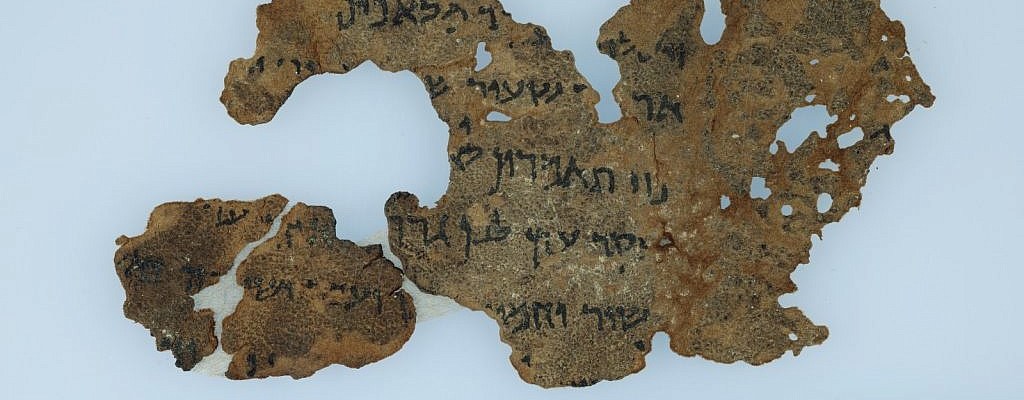
In this next series of posts, I will be introducing the concept of a supernatural council that works under God and with him. This will be a series of blogs to address my own findings in researching this and speaking about some common objections and how they interact with what I call the Divine Council Problem. The end goal of these blogs is to speak about why I find this to be true and revealed by Scripture and thus by Sacred Tradition, and how it is that discoveries such as the Dead Sea Scrolls argue against previously held concepts of the supernatural realm.
My defense firstly is that when the archeological landscape of what we call the Second Temple Period was further revealed by the Israeli Archeologists employing a Bedouin shepherd boy through the Dead Sea Scrolls collection. This era is also called the Philonic period in respect to a historian by the name of Philo. However, we will call it the Second Temple Period or (2TP) for these blogs. We have such Church doctors as Saint Thomas Aquinas, who wrote prolifically during his lifetime in the 13th Century. There is also quite a bit of information from Saint Augustine within his works, especially “The City of God.” There are other Church documents and such that we will speak about. The key thing to remember is we will be discussing firstly a historically critical time period in which our main actors are Second Temple Period Jews. This is the Time of Jesus Christ.
We will speak about the Church’s later response and interactions with the tough scriptures from Saint Jerome to even the modern era. We can discover an evolution of thought that we can call the Hellenistic Transfusion into Christianity and even speak as to why this ran contradictory to the spiritual outlook that originated in the life of the apostles and before. This novel philosophy is either a logical transition, or it is not. In my case, I do not believe that this ideology helped to propitiate a healthy understanding of the Divine Council, and hence why I consider it a problem.
For the course of these blogs, I will be using both the Hebrew Scriptures and the correlating textual criticism associated, along with the Septuagint for the Old Testament. We will also use the Church’s canon called the New Testament. These will be from and through various translations and will be noted. For the majority, I will be using the Augustine Institutes’ ESV Bible, which you can find it HERE.
 whiteknightscholar.org