
 Within the last few posts, we have followed a journey that began with my youth and continued into my early twenties. Through childhood years of indirect religious experience, teen years of intellectual development, to early adulthood and post veteran of the US Navy. Near the end of my 22nd year, I was out of the Navy and onto my own life, a time that was particularly difficult and filled with plenty of issues and problems of its own. Not merely did I spend too much time at a library, and scribbling words onto notebooks all I could do then was to argue with myself. During all of this time, I had difficulty finding work. I had even tried moving out of state to work and do this had its own hard time. Trying to find housing and keep work in an environment that moved through employees like a faucet does water. Therefore I returned back to Oregon and found myself trying to get work, I tried restaurant work, and line-cook to more call center work. Simply put this was a hard time finding any place to maintain employment for long enough to be useful within that business.
During the next few years, I spent quite a bit of time at the public library, and at the libraries of the local facilities of higher learning. I utilized these places to help understand those difficult questions, I was able to read about historical religions and even dive into them and read their religious texts. I had no bias blocking me from picking up the Bhargava-Gita to read about the early Hindu religion and the epic Mahabharata. Nor did I have anything stopping me from reading about the foundations of Islam and the five pillars. I also read much about the founders of the Protestant Reformation, from Martin Luther and John Calvin to Huldrych Zwingli and John Smyth. I spent many years in this period of my life reading and studying history not merely involved in the limited fields of these men, wh o wrote by their own hand in their own bias, but I now had the opportunity to read about their opposition. The amount of time I dedicated to reading texts and speaking to people who were teachers or instructors in the fields of philosophy or Protestant Theology gave me a bit of cheap education. Let me be specific I dedicated about ten and a half years to a field one can call comparative religion with a focus in theology. Ten years. Sure I did not turn in assignments, nor did I have to formulate a thesis, however, this is the level of education an individual after a master’s degree or above degree would pursue. I simply did not have to pay the money, or play the game of regurgitation to earn a degree.
Even in one hand, I would read the history of renaissance philosophy, on the other I would read Calvin’s Institutes of the Christian Religion. I would read the 95 thesis of Martin Luther and the response from Pope Leo the Tenth. I refused to allow myself to read these Reformers’ Texts without making notes that I could then compare to the philosophical thought and education of the same era. It became quickly apparent that many of these Reformers ignored or refused to acknowledge texts that might contradict directly what they articulated. One was even a rash man who had bouts of disrespectful name calling and a tendency towards being a drunkard, and obsessive compulsive. If anyone wanted to build a case around what they articulated they would have to ignore the behaviors and cling to the intellectualism that suffered beyond hope on a philosophy of romanticism and classical humanism.
When one has removed themselves from such eye opening topics as logic and reason they will find themselves finding what is real in that which they experience. A pe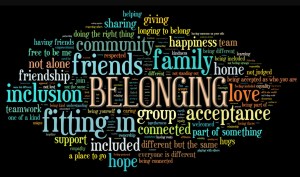 rson might find themselves at odds with a normal mode of action and enjoy the strife that it causes or participate in the strife caused by it. For example, as a teenager, I spend my time hanging out with the Goth kids, because they were rejected by the popular kids and found their own identity in being dark and mysterious. There I felt I belonged, but I did not wear the black clothes and boots, I wore normal blue jeans and t-shirts however, because I did not reject them, I myself was not rejected. Therefore, I could come to the conclusion philosophically that many of these protestant reformers who had some great desires and holy lives for transforming the magisterial filth from the Christian world, did themselves propagate a new generation of filth. Even as I read Martin Luther who would change his mind nearly every single letter on a topic would declare that thinking critically and with reason was the antitheses to Christianity. Of course, his exact words are quite a bit more colorful than I feel comfortable repeating.
 whiteknightscholar.org
