
In our previous blog post, we spoke about some of the philosophies that began to shape the way I was learning to relate to the world as a mere agnostic individual. Many people who grow up in a faith tradition typically remain in that belief so long as they can maintain access to it. What I m ean is that if you grow up in a family that goes to church every Sunday, and another day in a small group say a Bible study or a youth group, they will maintain this given two options. They turn eighteen and go to a Christian college, and maintain a vigorous relationship with that family throughout the time they are away, or they remain within the community after reaching adulthood and do not venture outside of their closed knit Christian family group.
However, what happens when a child reaches legal age after been desensitized to Christian people, and develops a psychological understanding of things like abuse cycles, manipulation techniques, and application of cognitive distortions. In short an individual grows into an understanding first of what is wrong with themselves, the way they act, and the manner in which they think. Once they correct these errors and can then perceive the world around them it does not take long to spot those same issues within other parameters of society. For example, Pulpit Manipulation will show you in a succinct way what abuse cycles look like within a Christian community, the author Haylee Hill does a great job at offering examples in clear and concise language that is easy to follow. I will probably work out a blog about this topic in more depth later. Being able to learn about these situations did not merely help me as a youth, for adults can be masters at hiding intentions, but I am able to see it today and have seen it recently. Observationally, these abuse cycles happen within small Christian communities with tight-knit family-style relationships that often form when members were young. However, this is a blog chapter about my younger years and we will return to that.
While I was a student at the Boys Home, Saint Mary’s Home for Boys I learned well about psychological terms such as thinking errors, manipulation, and the cycles of abuse. In learning these things I was able to apply them to keep myself from harming other p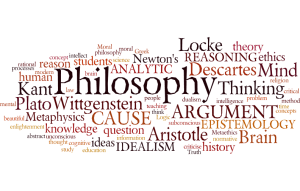 eople and overcoming my own issues with abuse. This also helped to color the black and white world that the Evangelical Televangelist world view tried to teach me. Basically, I began to see that there were plenty of issues within this Christian group, and back then I had no idea how deep the issues spread throughout Protestantism as a religion. I turned to philosophy instead and absorbed thinking on a different level. John Locke helped me understand that everything we know comes from experience and from reflecting on that experience. We are not born with any innate or preconceived ideas, but rather are a blank slate, there I learned about realism. Then I turned to people such as Plato, and Rene Descartes who taught rationalism, so from them I learned that God is basically a Voluntarist, meaning that God has absolute freedom of indifference, and this added to my agnosticism. I did read other rationalist philosophers, Hegel, Kant, and Leibniz, however, something in the thought processes of Descartes and Plato stuck with me more. They showed me how to question intellectually everything.
When studying philosophy in a more surficial manner it can be helpful to learn thoughts that would be contrary to a particular ideology. This is the way of philosophy, one can argue that the sky is a subtle blue, and another it is a vibrant cyan. Each would argue their points and articulate their reasons, at the end of the day neither individual will be any closer to the true color of the sky than when they started. Instead, they will go their own directions and build schools of thought and promulgate them based on their own belief. This is and always will be the issue with human originated philosophy, it will grasp at the sky, it will pull down the moon, and it will blow out stars like candles, yet without some kind of leap, philosophy is doomed to fall flat on its face. That leap might require faith. I read Plato, Aristotle, and neither of those ancient ones’s ever made that leap, so I turned to discover a method that left one relying on emotion.
 Contrary to rationalism is romanticism, this is not a philosophy on how to woo the ladies, and how to make the women swoon for you. The origin of Romanticism and many more philosophy ideas came from within the context of the Age of Enlightenment. Romanticism argued that through emotion one gains self-awareness, and it is a necessary pre-condition to improving society and bettering the human condition. This means that when we get to know our emotional state and develop what it is that makes us feel specific or special ways we begin to feel more real. That within our emotional state we prove to ourselves that we exist. This stood directly against being a Rationalist, and it took some work to figure out how I could think along with the terms of these branches of philosophic thought at will. However, as agnostic such contradictions were not cancelations of belief, but reasons to equalize and establish exactly why I am who am I.
 whiteknightscholar.org